


These consummately beautiful sculptures demand a proper
setting – and a trip to Athens has convinced me the Acropolis Museumis
that place
What can you do with the world's most beautiful art?
Where does it belong?
How should it be cared for and displayed?
Where does it belong?
How should it be cared for and displayed?
The art in question is the array of sculpture created in Athens in the 5th century
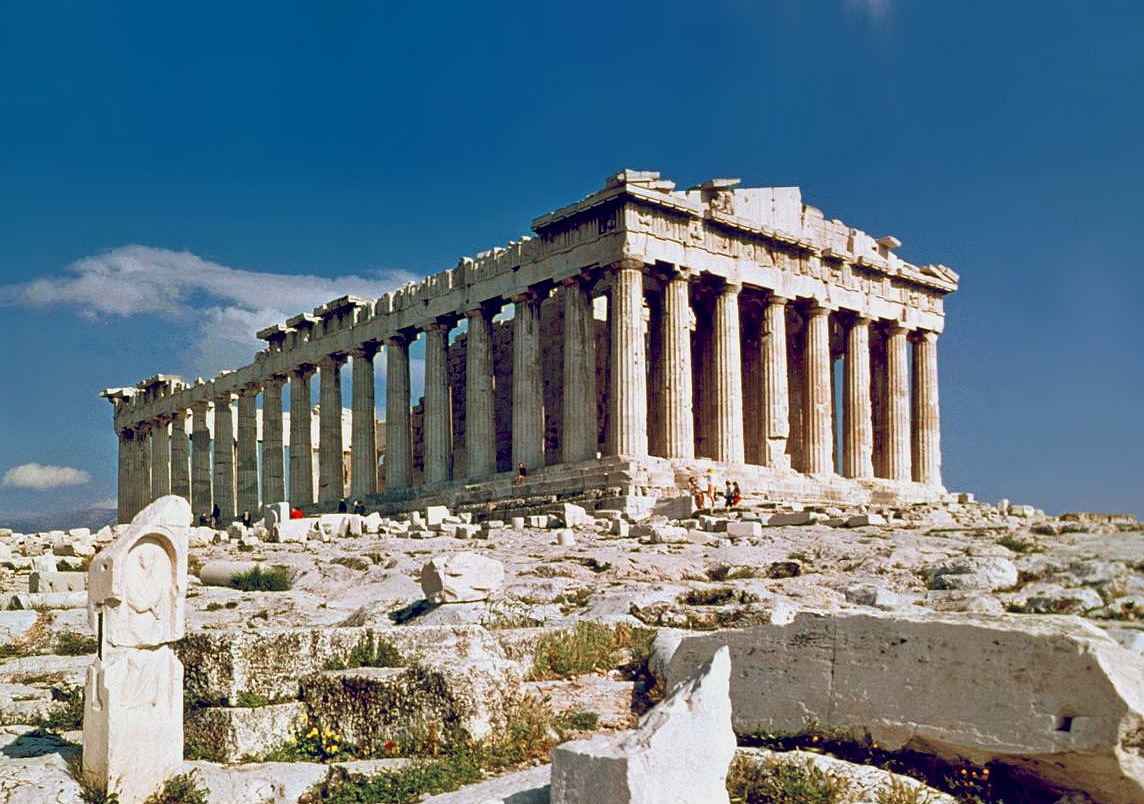
BC to decorate the Parthenon, the temple to Athena that still, today,
dominates the skyline of the Greek capital....
BC to decorate the Parthenon, the temple to Athena that still, today,
dominates the skyline of the Greek capital....
Notoriously, the best-preserved stone carvings that survived on the temple
in the early 19th century were removed by Lord Elgin and brought to London,
where they have been a fixture of the British Museum ever since.
Equally notoriously, Greece wants the Parthenon marbles (aka the Elgin marbles)
back – and in 2009 opened a state-of-the-art museumbeneath the Acropolis
hill on which the Parthenon stands, to house them.
in the early 19th century were removed by Lord Elgin and brought to London,
where they have been a fixture of the British Museum ever since.
Equally notoriously, Greece wants the Parthenon marbles (aka the Elgin marbles)
back – and in 2009 opened a state-of-the-art museumbeneath the Acropolis
hill on which the Parthenon stands, to house them.
Where do the Parthenon sculptures really belong? To get to the just, right,
sensible answer I have to start from my opening claim: this is the world's most
beautiful art. It has only a handful of rivals in the highest rank of artistic achievement
– think Leonardo da Vinci, thinkMichelangelo.
sensible answer I have to start from my opening claim: this is the world's most
beautiful art. It has only a handful of rivals in the highest rank of artistic achievement
– think Leonardo da Vinci, thinkMichelangelo.
But the sculptures of the Parthenon were created 2,000 years before the masterpieces
of the Renaissance. They have a life, energy, calm and grandeur all their own.
The figures of reclining goddesses from the east pediment, for instance, are daunting
yet yielding syntheses of mass and grace that are more like dreams than objects.
The veins that throb on the horse-flanks of a centaur; the pathos of animals lowing
at the sky as they are led to be sacrificed; such details add up to a consummate beauty
that is, I repeat, rivalled only by the greatest art of the Renaissance.
of the Renaissance. They have a life, energy, calm and grandeur all their own.
The figures of reclining goddesses from the east pediment, for instance, are daunting
yet yielding syntheses of mass and grace that are more like dreams than objects.
The veins that throb on the horse-flanks of a centaur; the pathos of animals lowing
at the sky as they are led to be sacrificed; such details add up to a consummate beauty
that is, I repeat, rivalled only by the greatest art of the Renaissance.
If the Sistine Chapel frescoes had been detached from their ceiling in the 19th
century and hung on the walls of the National Gallery, would we appreciate
them as much?
No. We'd struggle to imagine the real power of Michelangelo's paintings in their
original location. We'd miss the thrill of stretching our necks and the excitement
of walking through the Vatican to get to them, even the fuss of queuing.
Context is all.
century and hung on the walls of the National Gallery, would we appreciate
them as much?
No. We'd struggle to imagine the real power of Michelangelo's paintings in their
original location. We'd miss the thrill of stretching our necks and the excitement
of walking through the Vatican to get to them, even the fuss of queuing.
Context is all.
The sad truth is that in the British Museum, the Parthenon sculptures are not
experienced at their best. For one thing, they're shown in a grey, neoclassical
hall whose stone walls don't contrast enough with these stone artworks
– it is a deathly space that mutes the greatest Greek art instead of illuminating it.
So if the British Museum wants to keep these masterpieces it needs to find the
money to totally redisplay them in a modern way.
experienced at their best. For one thing, they're shown in a grey, neoclassical
hall whose stone walls don't contrast enough with these stone artworks
– it is a deathly space that mutes the greatest Greek art instead of illuminating it.
So if the British Museum wants to keep these masterpieces it needs to find the
money to totally redisplay them in a modern way.
Or, it could give them to Greece, which has already built a superb modern
museum to do just that. The great thing about the Acropolis Museum's display
of the Parthenon sculptures – which currently includes pieces left by Elgin,
plus casts – is that it makes it easy to see how the sculptures fitted on the building,
and how they work as an ensemble. It also has one advantage London can never rival
– you can look from the sculptures to the museum's glass wall and see the
Parthenon itself, making a sensual connection between the art and its
architectural home.
museum to do just that. The great thing about the Acropolis Museum's display
of the Parthenon sculptures – which currently includes pieces left by Elgin,
plus casts – is that it makes it easy to see how the sculptures fitted on the building,
and how they work as an ensemble. It also has one advantage London can never rival
– you can look from the sculptures to the museum's glass wall and see the
Parthenon itself, making a sensual connection between the art and its
architectural home.
The first time I ever visited the Parthenon I was entranced by its unique
lightness and perfection and thought it absolutely obvious that the Parthenon
marbles need to be in Athens. Then I found out more about the campaign
to return them. It seemed to be too much about national pride, and not enough
about art. I don't care about nationalism, only about the best way to show this
stupendous art so everyone can feel its power. The way the Elgin Marbles
debate has turned art into an ideological plaything is a terrible distraction
from looking at the bloody things.
lightness and perfection and thought it absolutely obvious that the Parthenon
marbles need to be in Athens. Then I found out more about the campaign
to return them. It seemed to be too much about national pride, and not enough
about art. I don't care about nationalism, only about the best way to show this
stupendous art so everyone can feel its power. The way the Elgin Marbles
debate has turned art into an ideological plaything is a terrible distraction
from looking at the bloody things.
I got so alienated by the rhetoric surrounding the Parthenon marbles that I
argued (at the Cambridge Union) against returning them.
A lot of the Greek case remains untrue or unfair. At the new Acropolis Museum,
for instance, a video denounces Elgin for "carrying off" the sculptures.
It's not as simple as that. An honest case for returning this art to Greece has
to acknowledge that it has been looked after well by the British Museum.
The pieces of the sculpture in London are in superb physical condition.
You can see tiny details. That is not true of the examples in Athens
– they have suffered severe damage from pollution and many have lost
all but their rudimentary form.
argued (at the Cambridge Union) against returning them.
A lot of the Greek case remains untrue or unfair. At the new Acropolis Museum,
for instance, a video denounces Elgin for "carrying off" the sculptures.
It's not as simple as that. An honest case for returning this art to Greece has
to acknowledge that it has been looked after well by the British Museum.
The pieces of the sculpture in London are in superb physical condition.
You can see tiny details. That is not true of the examples in Athens
– they have suffered severe damage from pollution and many have lost
all but their rudimentary form.
But that's in the past. In the 1970s when the Parthenon itself was getting
corroded by bad air the sculptures were safer in London.
Today, they belong in the Acropolis Museum.
corroded by bad air the sculptures were safer in London.
Today, they belong in the Acropolis Museum.
Nationalist or not, Greece has proved it loves this art and sees it for what it is.
It is Greece, and not the British Museum, that deserves to be custodian
of the world's greatest art, for the world. And for art.
theguardian.comIt is Greece, and not the British Museum, that deserves to be custodian
of the world's greatest art, for the world. And for art.




Δεν υπάρχουν σχόλια:
Δημοσίευση σχολίου